
Atomic Energy Commission chairman Ajit Kumar Mohanty stated that India is on the verge of a significant technological transformation, driven by advancements in AI, quantum technologies, and other fields. Speaking at BIT Mesra's convocation, he emphasised the need for strong indigenous capabilities, skilled professionals, and interdisciplinary collaboration to achieve a developed India. Other speakers, including BIT Mesra's Chancellor and Vice Chancellor, echoed the importance of continuous learning and contributing to national progress.
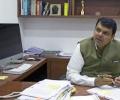
Maharashtra Chief Minister Devendra Fadnavis launched several facilities under the Mega City Policing initiative, emphasising that technology should enhance transparency, accountability, and efficiency in policing without detaching officers from ground realities. He highlighted the development of an AI-based investigation system 'Tapas Sarathi' and the integration of digital evidence, aiming to improve conviction rates and ensure timely justice.

Defence Minister Rajnath Singh has called for India to become a global leader in advanced technologies, particularly in strengthening its non-destructive testing (NDT) ecosystem. He emphasised the need for indigenous capabilities, consistent quality assurance, and the integration of advanced digital technologies like AI and ML to ensure reliability and self-reliance in defence applications.
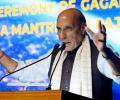
Defence Minister Rajnath Singh has urged India to become a global leader in advanced technologies, particularly in non-destructive testing (NDT), to bolster self-reliance and defence preparedness. He highlighted the critical need for indigenous capabilities in inspection technologies, quality assurance, and reliable testing results for strategic applications, emphasising that NDT is vital for ensuring the integrity of defence systems without causing damage.

Salesforce CEO Marc Benioff has identified a significant opportunity for India as the company transitions its enterprise systems to an AI-first model. He emphasised India's crucial role, leveraging its extensive pool of technology professionals and partners, in this global technological transformation, which he likened to a "Y2K moment" for engineering.

Salesforce CEO Marc Benioff highlights India's crucial role in the company's shift to an AI-first enterprise system. He emphasized India's vast pool of technology professionals and partners as key to this transformation, underscoring the country's importance in Salesforce's global strategy.

BJP MP Raghav Chadha addressed the 12th IPU Global Conference of Young Parliamentarians in Samarkand, Uzbekistan, highlighting India's digital transformation journey. He emphasised how technology is widening access and promoting inclusion, citing UPI's success, affordable data, and robust data protection laws. Chadha also discussed India's digital cooperation with Uzbekistan and the importance of digital rights, safety, and skill development for all citizens.

Prime Minister Narendra Modi emphasised the democratisation of technology to ensure no section of society is left behind, advocating for affordable and accessible digital services, especially for the Global South. He highlighted the potential of Digital Public Infrastructure (DPI) and called for solutions to cyber fraud, global standards for emerging tech, and mechanisms to identify AI-generated content during his interaction with GSMA board members.

ideaForge Technology has received an order from the Survey of India for its Q6 V2 unmanned aerial vehicles. These advanced, DFCA-certified drones will enhance the Survey of India's ability to collect high-quality aerial and geospatial data for surveying and mapping across diverse terrains, offering efficient and rapid deployment for large-scale projects.

The BRICS New Delhi Declaration has endorsed India's proposals for a Working Group on Sports Technology and a Sports Goods Manufacturing Conclave, aiming to enhance cooperation and innovation among member nations in the sports sector.
India has launched three indigenous AI foundation models, EKA-1, Dhir 2B, and Dhir 5B, under the IndiaAI Mission. Developed by Soket Labs Technology and Research and ZenteiQ AiTech Innovations, these models aim to enhance India's technological and strategic autonomy in artificial intelligence, offering solutions for various sectors including banking, cybersecurity, defence, and government services, with a focus on Indian languages and offline capabilities.

Pragya Misra, OpenAI's first India hire and former head of strategy and global affairs, has been promoted to Head of Business Development for India and South Asia. She announced her new leadership role on Tuesday, highlighting India's status as ChatGPT's largest country. Misra's new focus will be on building partnerships to drive AI transformation for businesses and expand technology access across the region.

Trai Chairman Anil Kumar Lahoti highlighted the transformative role of satellite communications in expanding seamless connectivity across India, especially in remote areas. He noted that India's space economy is projected to grow significantly, driven by satcom technology that will bridge the digital divide, provide resilient infrastructure during disasters, and support strategic sectors.
Trai Chairman Anil Kumar Lahoti highlighted the transformative role of satellite communications in expanding seamless connectivity across India, especially in remote areas. He noted that India's space economy is projected to grow significantly, driven by satcom technology that will bridge the digital divide, provide resilient infrastructure during disasters, and support strategic sectors.

A joint report by OPPI and EY reveals that India's pharma Global Capability Centres (GCCs) contribute an estimated USD 10.5 billion in GVA and employ 120,000 professionals. These centres, operated by 80% of top biopharma companies, are expanding beyond delivery to global mandates in science, technology, and business, leveraging India's talent, cost advantage, and digital strength. The report highlights their role in India's transition to a global pharma powerhouse driven by research and innovation, with AI becoming central to operations.

Union IT Minister Ashwini Vaishnaw reiterated India's commitment to becoming the world's artificial intelligence (AI) application capital. This focus comes amidst a global downturn in AI stocks, with Vaishnaw acknowledging the industry's rapidly changing environment. India aims to deploy AI across various sectors for large-scale transformation.

Nasscom President Rajesh Nambiar stated that artificial intelligence is not making India's Business Process Management (BPM) industry obsolete but is instead driving its significant reinvention. He highlighted that the sector has an opportunity to become the world's "intelligent operations and transformation hub" by leveraging AI, analytics, and cloud-based operations, moving beyond traditional call centres. Nambiar outlined three key priorities for the industry, including reimagining processes, building hybrid human-AI operating models, and redefining India's global BPM representation.

Prime Minister Narendra Modi creatively used the popular video game Grand Theft Auto (GTA) to illustrate India's remarkable transformation from a "fragile five" economy to the world's fastest-growing nation, highlighting significant advancements in various sectors over the last 12 years.

India's Indo-Pacific approach has traditionally emphasised strategic autonomy, ASEAN centrality, freedom of navigation, respect for international law and an inclusive regional order. Its growing defence and maritime partnerships with Australia, Japan, Indonesia, Vietnam and other Southeast Asian countries provide additional depth to this approach, point out Dr Kumar and Dr Jasmeet Kaur.

Goa Chief Minister Pramod Sawant stated that while Artificial Intelligence (AI) can make filmmaking more accessible, it cannot replace human imagination, emotions, and creative judgement. Speaking at the IFFI, he emphasised that filmmakers remain storytellers, with technology providing new tools. Sawant also highlighted the need for greater representation of women in key filmmaking roles and noted AI's potential to foster new creators in India.
Delhi-NCR has become India's leading centre for AI-enabled robotic-assisted cardiac surgeries, with 21 installations and approximately 1,800 procedures performed in 2025. Experts predict a 40 per cent rise in 2026, driven by advanced medical infrastructure and growing adoption. This minimally invasive approach offers benefits like reduced trauma and faster recovery, positioning India to potentially surpass the US in such procedures by 2031.
IBM Chairman and CEO Arvind Krishna details the company's substantial annual investment in India and its global USD 10 billion commitment to quantum computing over the next five years. He addresses the potential for AI to displace 10-20 per cent of jobs, particularly in the BPO sector, while also highlighting India's significant opportunity in the AI ecosystem. Krishna urges India to accelerate AI adoption, scale existing tech initiatives, and build its semiconductor manufacturing, advocating for a light-touch approach to AI regulation and emphasizing critical thinking in an AI-driven economy.
Preeti Lobana, Google India VP, stated on Wednesday that Google views AI as an "economic equaliser" and a democratic technology. Speaking at Google Cloud Day, she highlighted AI's potential to empower businesses, especially SMEs, in India's journey towards Viksit Bharat 2047. Google has committed USD 15 billion to scale India's digital and AI infrastructure, including an AI hub in Visakhapatnam, to support the IndiaAI Mission.

S Mahendra Dev, chairman of the Economic Advisory Council to the Prime Minister (EAC-PM), stated that India needs to increase the manufacturing sector's share in its GDP from the current 16-17 per cent to 25 per cent by 2047 to achieve developed economy status. This goal requires an average real GDP growth of around 8 per cent annually over the next 21 years, supported by a 34-35 per cent investment rate and diversified long-term financing.

Assam Chief Minister Himanta Biswa Sarma launched the North East Seva Innovation Challenge (NESFIC), envisioning the region as India's 'living laboratory' for technology and problem-solving. The initiative aims to empower young innovators to address real-world challenges faced by government, industries, and citizens, with a focus on practical implementation and government procurement.
The All India Tennis Association (AITA) has launched 'AI Coach', a new digital tool in beta, aimed at providing tennis players with access to player-specific information, rankings, and head-to-head match-up insights. The tool is designed to help players better understand opponents and prepare for competitions, with future upgrades planned to integrate more tournament data for comprehensive insights.

Prince William, speaking at the Earthshot Prize 2026 Impact Assembly in Mumbai, lauded India's progress in sustainable development and climate solutions. He highlighted India's achievement of 50% non-fossil fuel electricity capacity ahead of schedule and its innovative Earthshot Prize winners and finalists, showcasing how growth and environmental protection can coexist.

Former US Secretary of State Antony Blinken stated that the US must respect India's right to self-defence and maintain a zero-tolerance policy towards terrorism, highlighting the "fundamentally different" nature of Washington's relationships with New Delhi and Islamabad. He described US-India ties as global and strategic, while US-Pakistan relations are regional. Blinken also touched upon cooperation in emerging technologies, India's ties with Russia, rapid global changes, US domestic politics, and the West Asia conflict, advocating for a two-state solution.

Karnataka IT Minister Priyank Kharge reviewed preparations for the 29th Bengaluru Tech Summit 2026, themed "AI & Beyond." The summit, scheduled for November 17-19, 2026, will feature over 1,800 exhibitors, focusing on AI, DeepTech, biotechnology, electronics, robotics, and startups, aiming to foster innovation and collaboration.

Meghalaya Chief Minister Conrad K Sangma has outlined an ambitious vision to transform Shillong into an Information Technology hub and the next Artificial Intelligence (AI) Valley. Speaking at an AI job fair, Sangma emphasised the need for greater industry participation, skilled manpower development, and improved infrastructure, including reliable power, connectivity, and logistics, to attract global tech companies. The state government is determined to create a robust ecosystem to provide high-value employment opportunities for local youth and prevent migration.
A report by Bain & Company and HealthQuad identifies remote patient monitoring, OT/ICU optimisation, and chronic disease management as key opportunities for Artificial Intelligence in Indian healthcare. The report highlights a shift from experimental AI to real-world applications, driven by government initiatives, increasing EMR adoption, and a robust startup ecosystem. AI's autonomous capabilities are rapidly advancing while costs decrease, creating significant growth potential for providers and startups.

Prime Minister Narendra Modi has announced a significant 24,000 crore Nepalese rupees development package for Nepal, further solidifying bilateral ties and launching key India-assisted projects, including a new cross-border passenger rail link between Ayodhya and Janakpur Dham. This move signals a major reset in relations after a period of strain over border disputes, with both leaders emphasising deep kinship and mutual support.
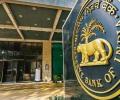
The Reserve Bank of India (RBI) is planning to extend tokenisation to various financial asset classes, building on its successful trials with certificates of deposit (CDs). This move aims to enhance the efficiency of issuance, trading, and settlement of financial assets, leveraging blockchain technology and wholesale Central Bank Digital Currency (CBDC) for atomic settlements.
Maharashtra Chief Minister Devendra Fadnavis announced the state's ambition to become India's leader in quantum technology. The state plans to build a robust ecosystem, align with the National Quantum Mission, and train over 5,000 professionals, recognising AI, semiconductors, and quantum tech as key pillars for future growth and global competitiveness.

Actors Carrie Coon and Morgan Spector, stars of "The Gilded Age", draw parallels between the rapid technological advancements of the late 19th century, the setting of their show, and the current rise of Artificial Intelligence. They express concerns about AI's unforeseen societal impacts, comparing it to the industrial revolution's exploitation of labour and the chaotic expansion of railroads that led to the displacement of indigenous communities.
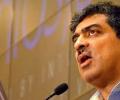
Infosys co-founder Nandan Nilekani has dismissed fears that artificial intelligence will lead to job losses in India's IT services sector, calling such concerns "hogwash" and "disaster marketing." Speaking at the Bloomberg New Economy Forum 2026, Nilekani argued that AI will actually increase demand for IT firms as it necessitates complex business transformations and creates new types of jobs, particularly in small businesses.

Jio Platforms' Managing Director Akash Ambani has outlined an ambitious vision for the company's future, vowing to take it to new heights of growth and excellence while democratising technology across India, including space-based connectivity, following its blockbuster initial public offering.

India has secured a spot among the top 10 leading emerging-market performers in artificial intelligence (AI) readiness, with private investment in AI more than tripling to USD 4.1 billion in 2025, according to a new World Bank report.

Karnataka Chief Minister D K Shivakumar urged the Centre to expedite statutory clearances for the Mekedatu balancing reservoir project and withdraw recommendations of the Kasturirangan report on the Western Ghats. He also requested aligning CSR initiatives with state guidelines to upgrade 1,000 government schools. These demands were made during the inauguration of CoSMOS in Mysuru, attended by Prime Minister Narendra Modi, where Shivakumar also highlighted Karnataka's contributions to space technology and the importance of decentralising scientific infrastructure.
Ministry of Information and Broadcasting Secretary Chanchal Kumar outlined the critical factors for the media and entertainment sector's next growth phase, including robust intellectual property, sustainable revenue models, and disciplined investments. Speaking at the CII Big Picture Summit, he emphasised the government's role in fostering an environment for creative enterprises and addressing challenges posed by digital platforms and AI. The CII White Paper also projected a USD 100 billion Indian M&E sector, advocating for stronger IP and regulatory reforms.
